

 前の記事
前の記事
焼尻島に伝わる民話 其の三
2026.09.06
サビタの花
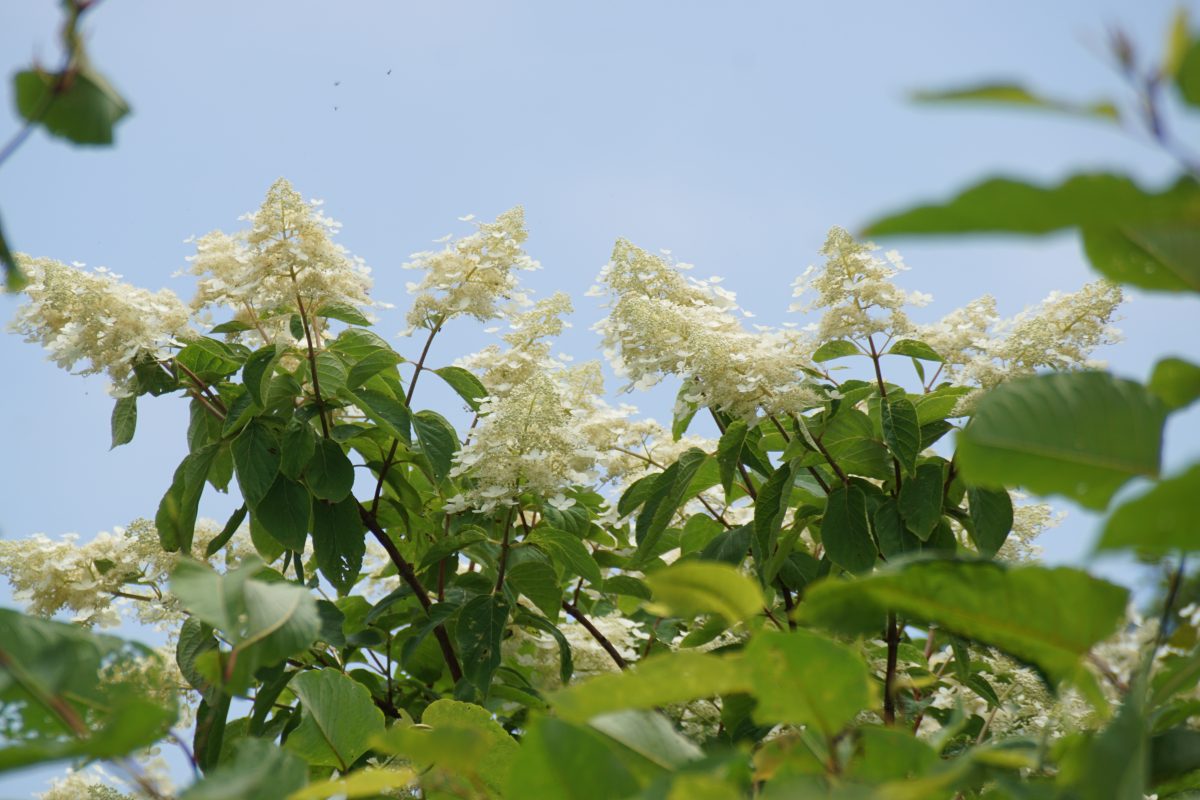
焼尻島に咲く花 ノリウツギ
牧場で草を食む羊たちを眺めながら、のんびりと歩いていると、低木の林が見えてきます。
その中で、ひときわ目を引く白い花がノリウツギです。
その名は、樹皮から糊(のり)を採ったことに由来するといわれています。
北海道では「サビタ」という名でも親しまれていますが、その語源ははっきりしていません。
花は夏に咲き、やがて茶色へと色を変えますが、翌年まで枝に残ることも珍しくありません。
そんな花にまつわるアイヌの伝説があります。
ある女性が求婚されたとき、相手にこう言ったそうです。
「サビタの花が枯れて落ちるまで待ってください。」
いつまでも枝に残る花のように、その返事は長い時を待たせるものだったのでしょう。
花にも物語があり、森にも歴史があります。
そんな話に耳を傾けながら歩くと、焼尻島の風景はまた違って見えてきます。
**Flowers of Yagishiri Island
Panicle Hydrangea (Hydrangea paniculata)**
As you stroll leisurely past the sheep grazing in the pasture, you come upon a grove of low trees.
Among them blooms the Panicle Hydrangea, its clusters of white flowers standing out against the green.
Its Japanese name, Noriutsugi, is said to come from the sticky glue (nori) once made from its inner bark.
In Hokkaido, it is commonly known as Sabita, although the origin of that name remains a mystery.
After flowering, the blossoms turn brown but often remain on the branches until the following year.
An Ainu legend tells of a young woman who was asked to marry.
She replied,
“Please wait until the flowers of the Sabita have withered and fallen.”
Since the dried flowers linger on the branches for a very long time, her answer gently expressed a wish to postpone her decision.
On Yagishiri Island, even a single flower carries a story, waiting quietly to be discovered.
磯野 直
- 民泊じいじの家オーナー
- 他の記事
かつて旅館「磯野屋」を営んでいた磯野直さんは、現在「民泊じいじの家」を開いて島の暮らしを伝えています。
WEBマガジンでは、ありのままの焼尻島の自然や日常を、飾らない言葉で発信中。
島を愛する「じいじ」のまなざしを、どうぞお楽しみください。